4 hr
Seattle Whale Watching and Wildlife Cruise
- Entry ticket
- Mobile voucher
- Valid same day
- Free cancellation
Seattle Whale Watching — Orca Expeditions & Wildlife Cruises
Resident pods, Zodiac runs, harbor narration — Salish Sea at close range
Compare fares, pick the fit — all bookings are mobile-voucher and eligible for free cancellation where shown.
4 hr
3 hr 30 min
1 hr
Selecting the right seattle washington whale watching tour involves choosing a boarding class that matches your comfort preferences for exploring the Salish Sea. This wildlife cruise offers distinct cabin tiers to enhance your experience while searching for local orca pods and humpback whales.
| Economy Main Cabin |
Top pick Vista Upper Deck |
Comfort VIP Cabin | |
|---|---|---|---|
| Seating Area | Lower deck main cabin | Upper deck cabin | Upper deck private cabin |
| View Type | Standard eye-level views | Panoramic elevated views | Premium top-deck vantage points |
| Boarding Priority | Standard queue | Standard queue | Priority check-in and boarding |
| Key Feature | Galley access & tables | Spacious leather seats | Complimentary refreshments |
| Best For | Budget-friendly sightseeing | First-time visitors | Premium comfort & convenience |
| See tickets & prices |
Verdict: First-time visitors should prioritize the Vista upper deck seattle washington whale watching tour tickets for the best balance of elevated views and onboard comfort.
Worth it for wildlife enthusiasts, not guaranteed
A seattle washington whale watching tour delivers professional naturalist narration and access to prime orca habitat in the Salish Sea, but sighting rates fluctuate with seasonal resident pod movements. Tours departing from Seattle and Anacortes range from harbor cruises with opportunistic marine life viewing to dedicated expeditions focused on gray whales, orcas, and humpbacks. The value calculation hinges on expectations: naturalists provide real-time context on cetacean behavior, migration patterns, and the Southern Resident population's conservation status, turning even a non-sighting trip into an educational experience. Zodiac expeditions offer closer encounters and faster repositioning when pods surface miles offshore. For visitors prioritizing guaranteed wildlife over open-water uncertainty, the harbor cruise option includes seals, sea lions, and seabirds as baseline sightings. Serious whale watchers benefit most from morning departures during peak feeding windows, while casual tourists may find shorter harbor tours sufficient.
Bottom line: Seattle washington whale watching tour tickets pay off when you value expert interpretation and accept that wildlife operates on its own schedule, not yours.
Seattle departures prioritize urban convenience, while San Juan Islands expeditions offer shorter transit times to active feeding grounds; most travelers find the San Juan Islands more effective for dedicated marine mammal observation.
|
Top pick Seattle Departure |
San Juan/Anacortes Departure | |
|---|---|---|
| Departure Location | Pier 69, Seattle | Anacortes / Friday Harbor |
| Travel Time to Whale Zones | Long transit to outer Salish Sea | Short transit to core habitat |
| Wildlife Sighting Probability | Moderate, dependent on migration path | High, proximity to feeding grounds |
| Convenience | High, accessible via seattle washington whale watching tour tours | Lower, requires regional travel |
| Overall Experience Pace | Leisurely city cruise | Expedited wildlife focus |
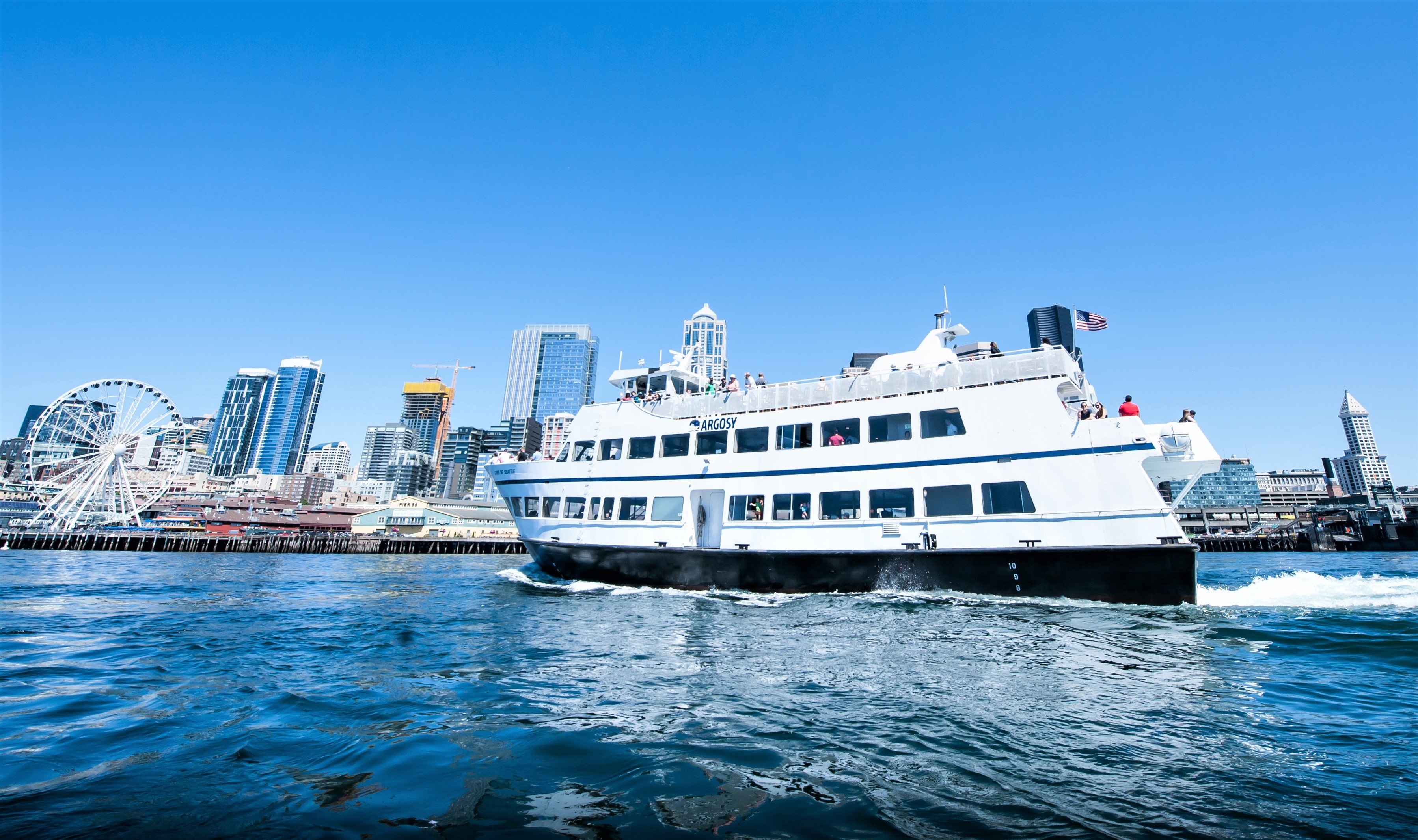
| Vessel Type | Large cruiser | High-speed rigid hull or cruiser |
| See tickets & prices |
Verdict: Choose the seattle washington whale watching tour tour for downtown accessibility, or select the San Juan route if securing seattle washington whale watching tour tickets for high-probability sightings is your priority.
Hand-picked experiences loved by thousands of travelers
3.5 hours
Free Cancellation
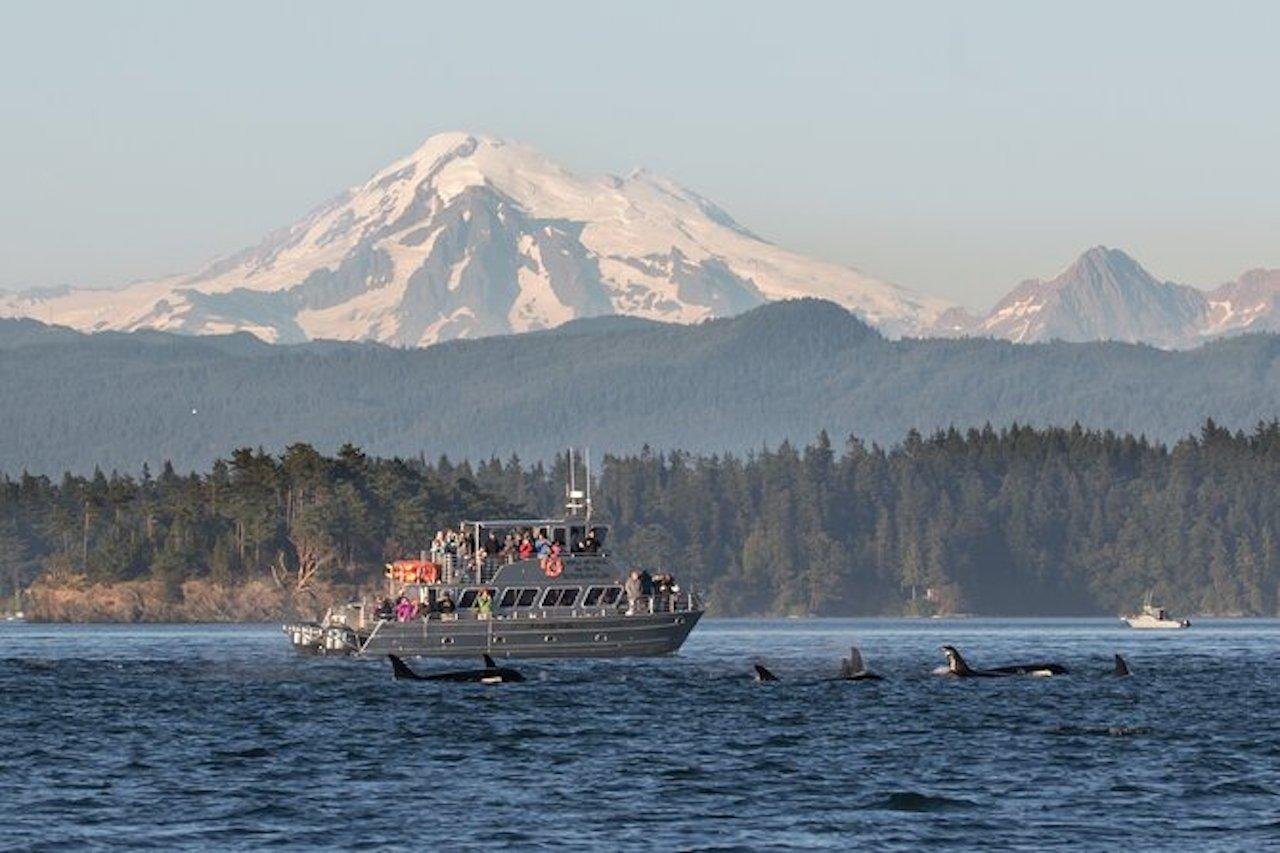
Speed across the Salish Sea in search of orcas, humpbacks, and marine life aboard an intimate zodiac boat
3.5 hours
Free Cancellation
High-speed marine safari seeking orcas, humpbacks, and gray whales with expert naturalist guides
2 hours
Free Cancellation
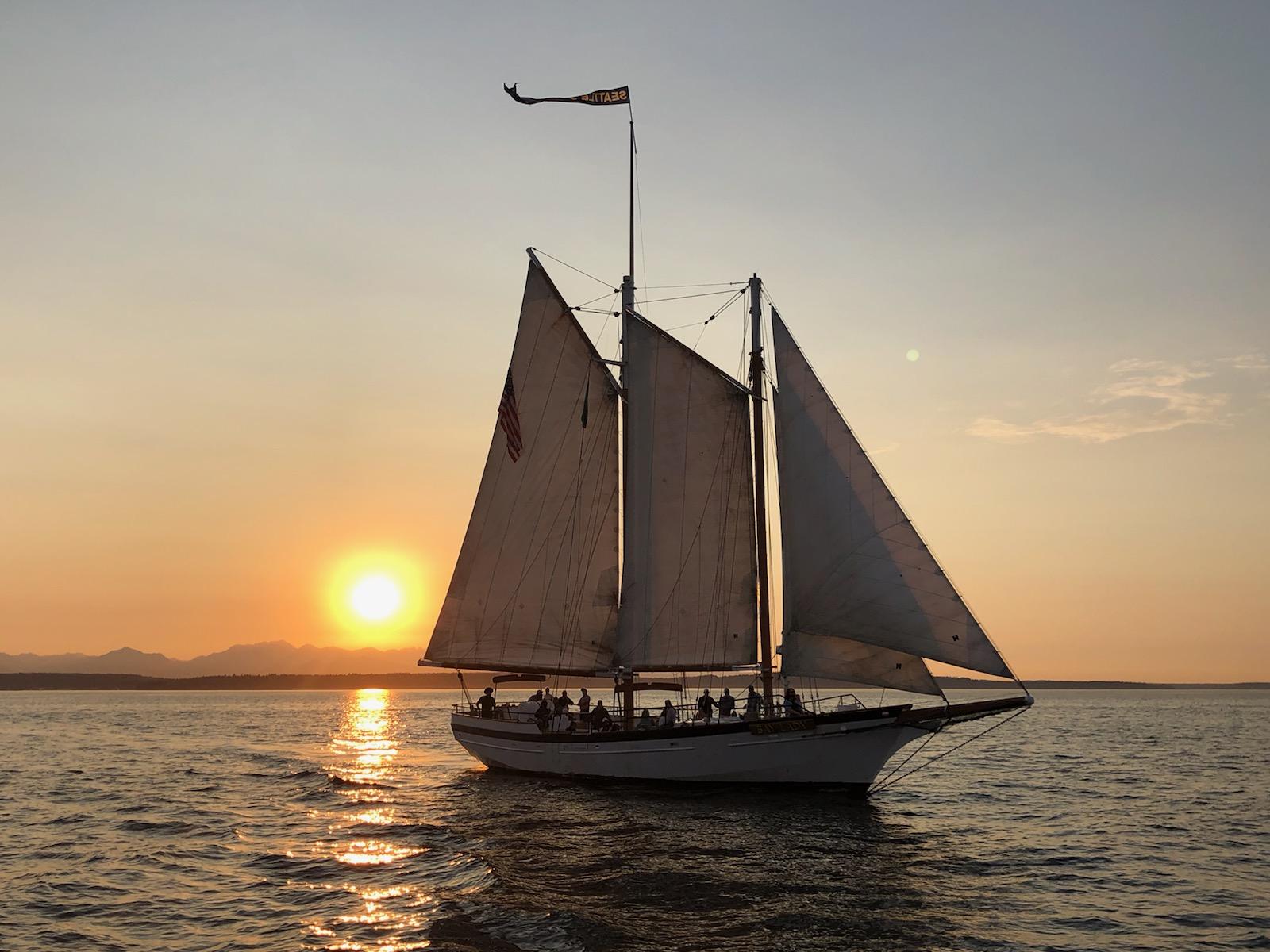
Glide across the harbor aboard a traditional tall ship as daylight fades behind the Olympic peaks
1.5 hours
Free Cancellation
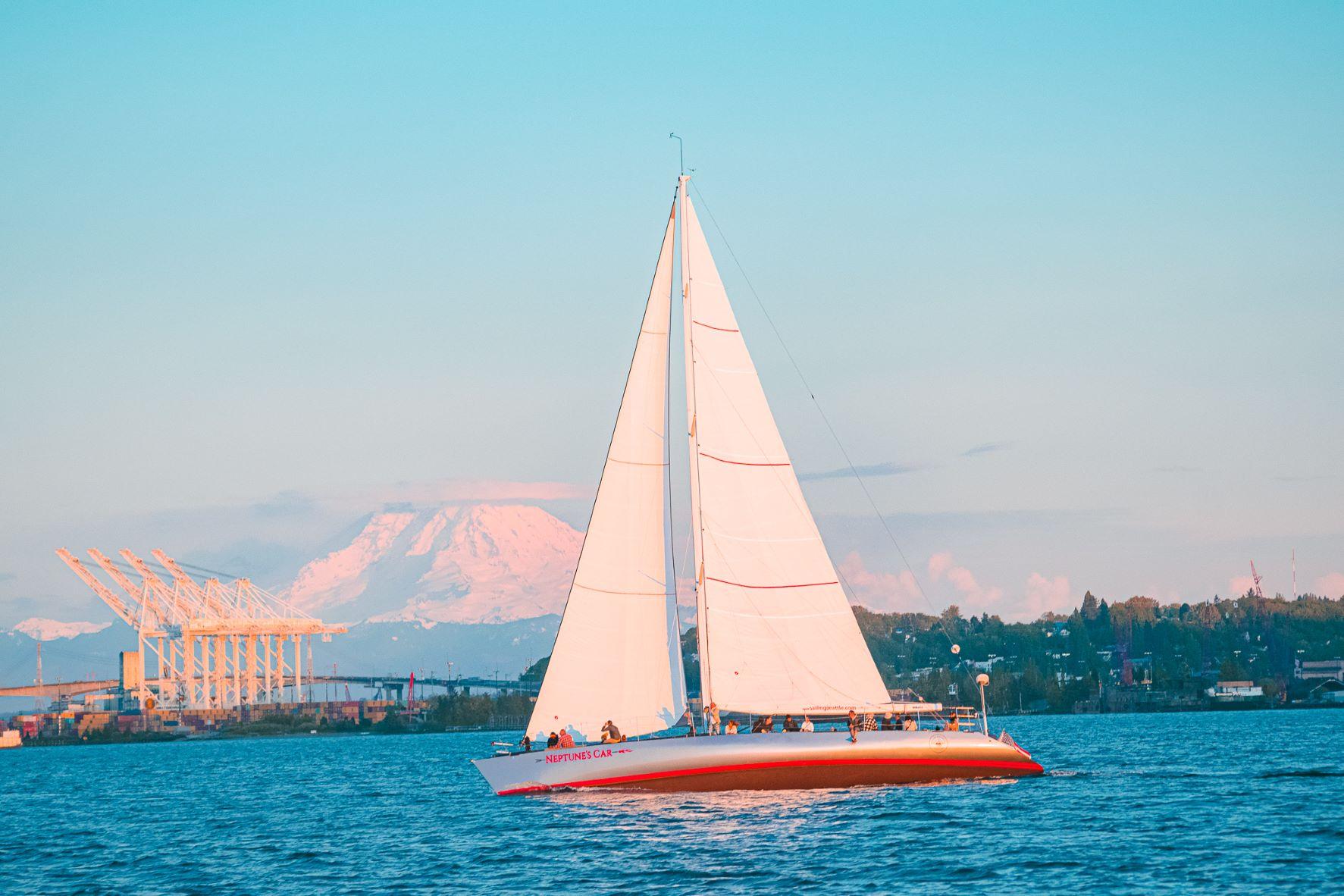
Glide across Elliott Bay on a classic racing yacht with skyline views, mountain vistas, and BYOB comfort
2 hours
Free Cancellation
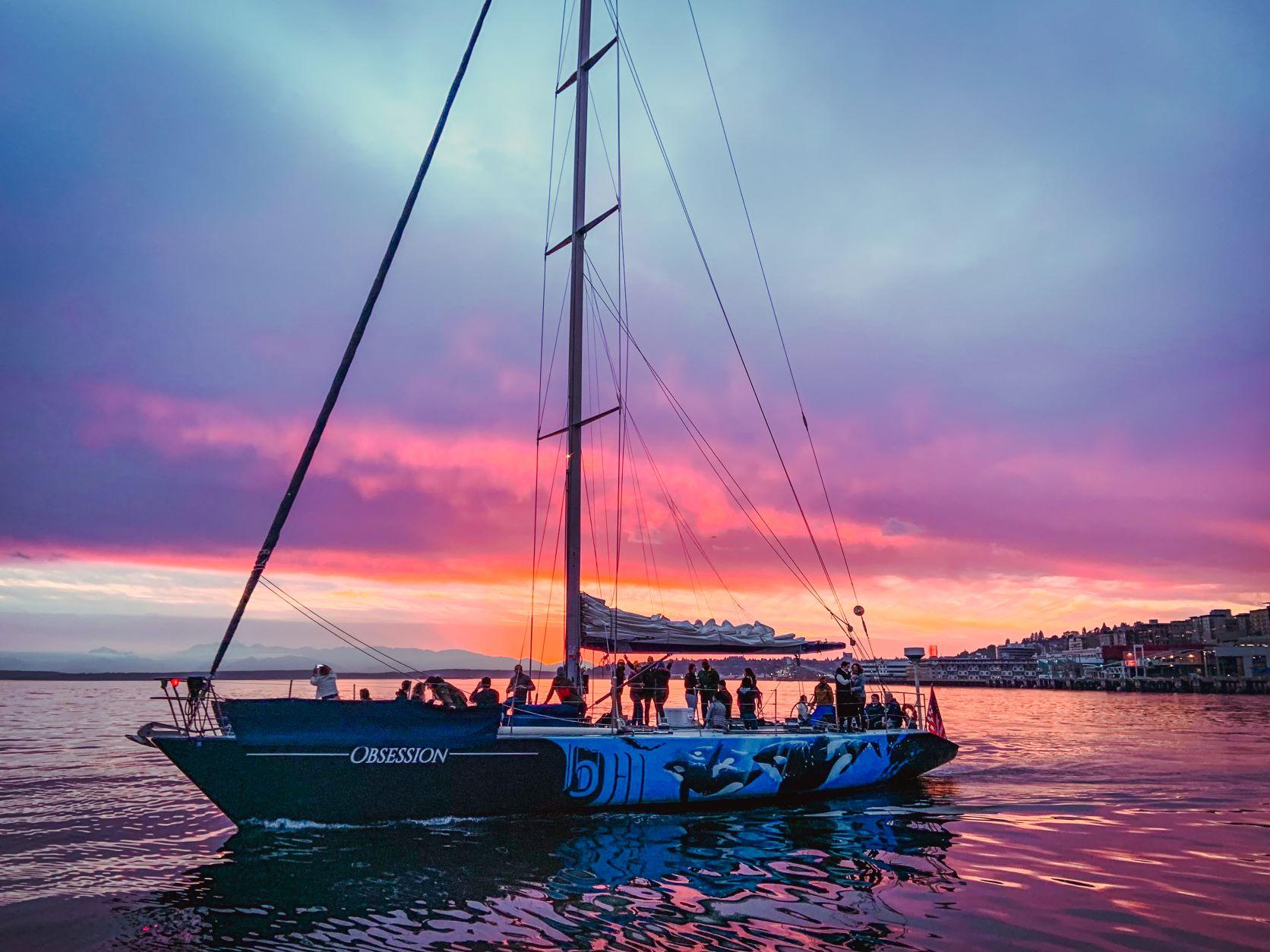
Glide across Elliott Bay aboard a racing yacht as the city skyline glows and the Olympics frame the horizon.
4 hours
Free Cancellation
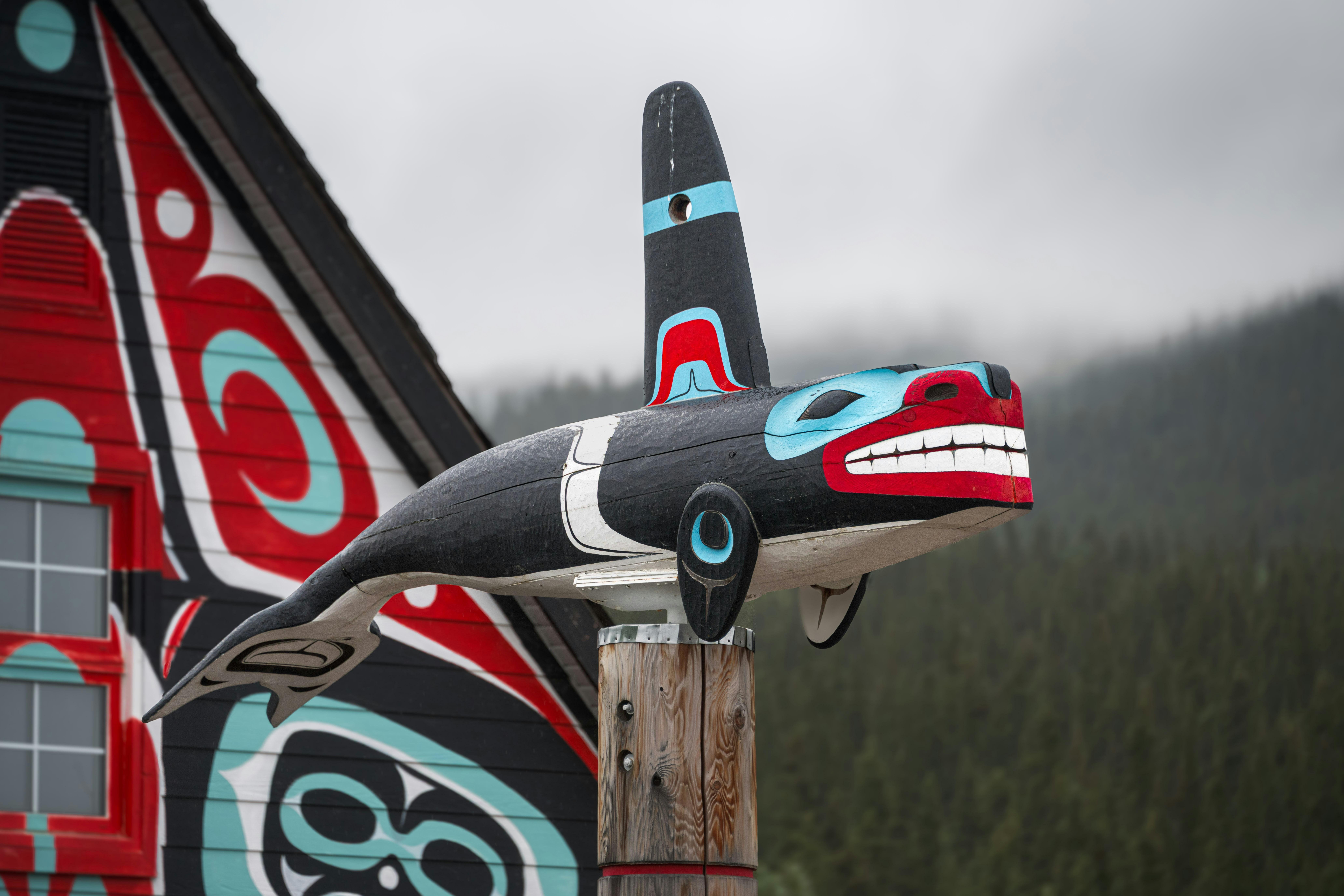
Explore the Salish Sea with Indigenous guides, spotting marine life while learning tribal stories and traditions
4 hours
Free Cancellation
High-speed boat journey through the San Juan Islands hunting for killer whales in their wild habitat
2 hours
Free Cancellation
Explore Pacific marine ecosystems with a knowledgeable local guide at one of Seattle's premier attractions
Confirm reservation at Pier 69 kiosk
Safety briefing and vessel orientation
Head into the Salish Sea for wildlife
Disembark back at the Seattle waterfront
The primary habitat for orcas, humpbacks, and minke whales located just off the coast
Provides excellent vantage points for regional bird watching and scenery
The central hub and starting point for every seattle washington whale watching tour
A protected channel where seasonal whale migrations frequently pass through
Offers panoramic views of the skyline and surrounding mountain ranges
You board at Pier 69 between nine and two in the afternoon, when natural light favors photography and resident orcas typically forage along the western shore of Whidbey Island.
The vessel clears Elliott Bay in twenty minutes, passing container terminals and the orange gantry cranes of Harbor Island before entering open water. Naturalists point out bald eagles on pilings and harbor seals hauled out on navigation buoys as the boat gains speed.
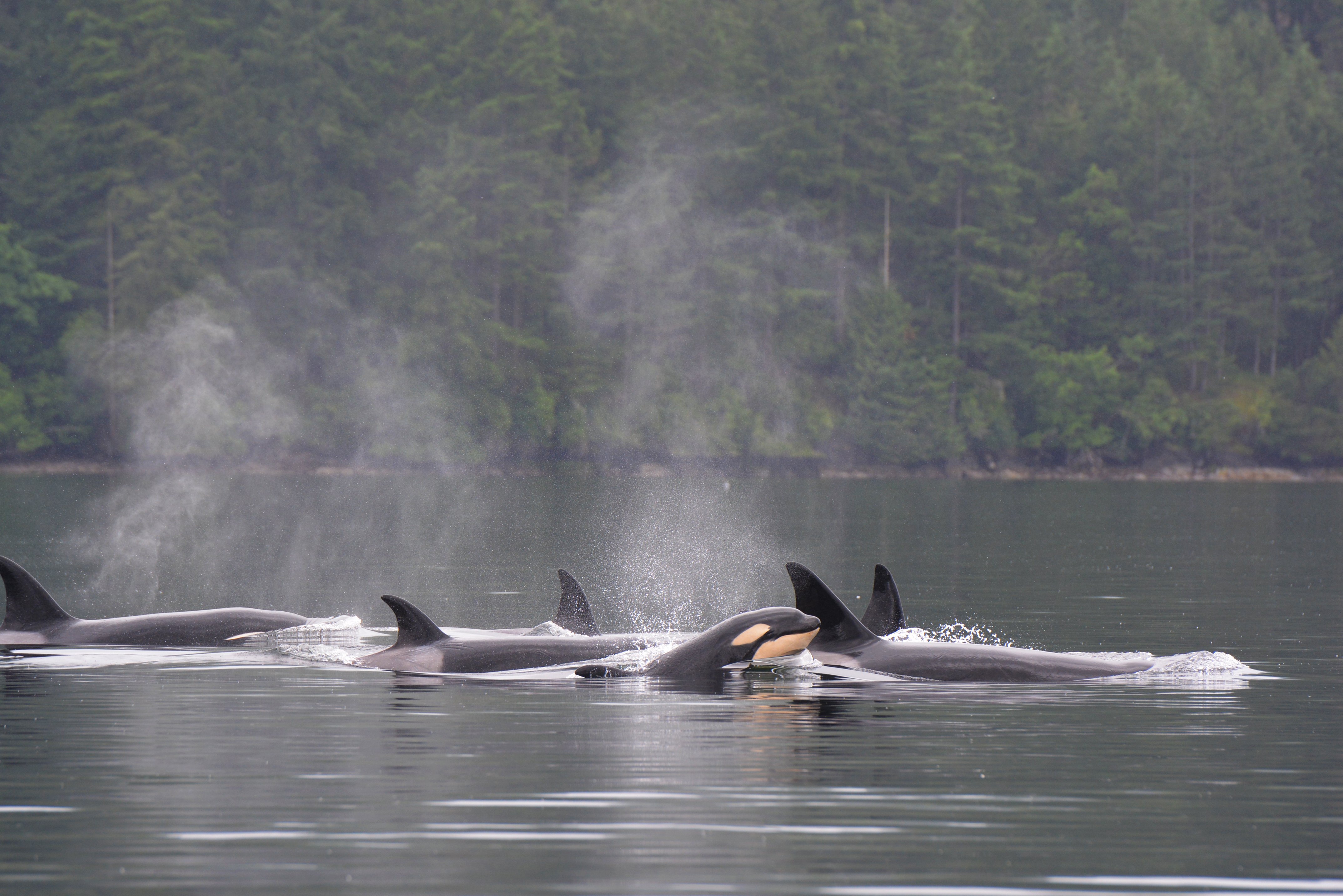
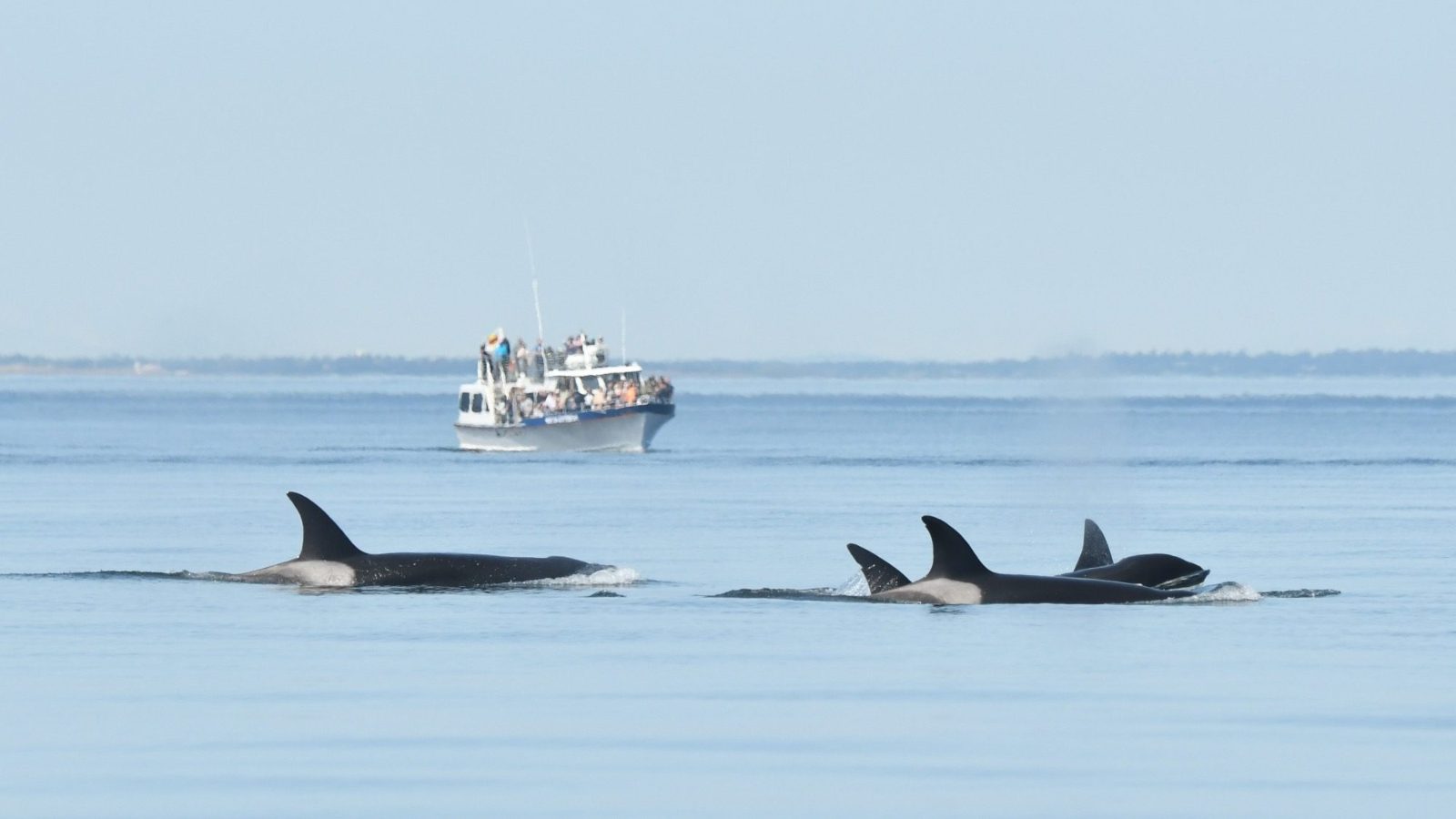
Once past Point No Point, the captain cuts throttle and scans the horizon with binoculars, listening for radio calls from spotter networks. You hear the first blow before you see it — a sharp exhalation carrying across flat water. The dorsal fin of an adult male rises six feet, black against gray chop, and the pod surfaces in a traveling line. You watch from the rail as the whales dive in unison, their flukes lifting clear of the surface for thirty seconds before they reappear a quarter mile ahead. The hydrophone speaker crackles with echolocation clicks, a rapid-fire percussion that intensifies when the pod is hunting.
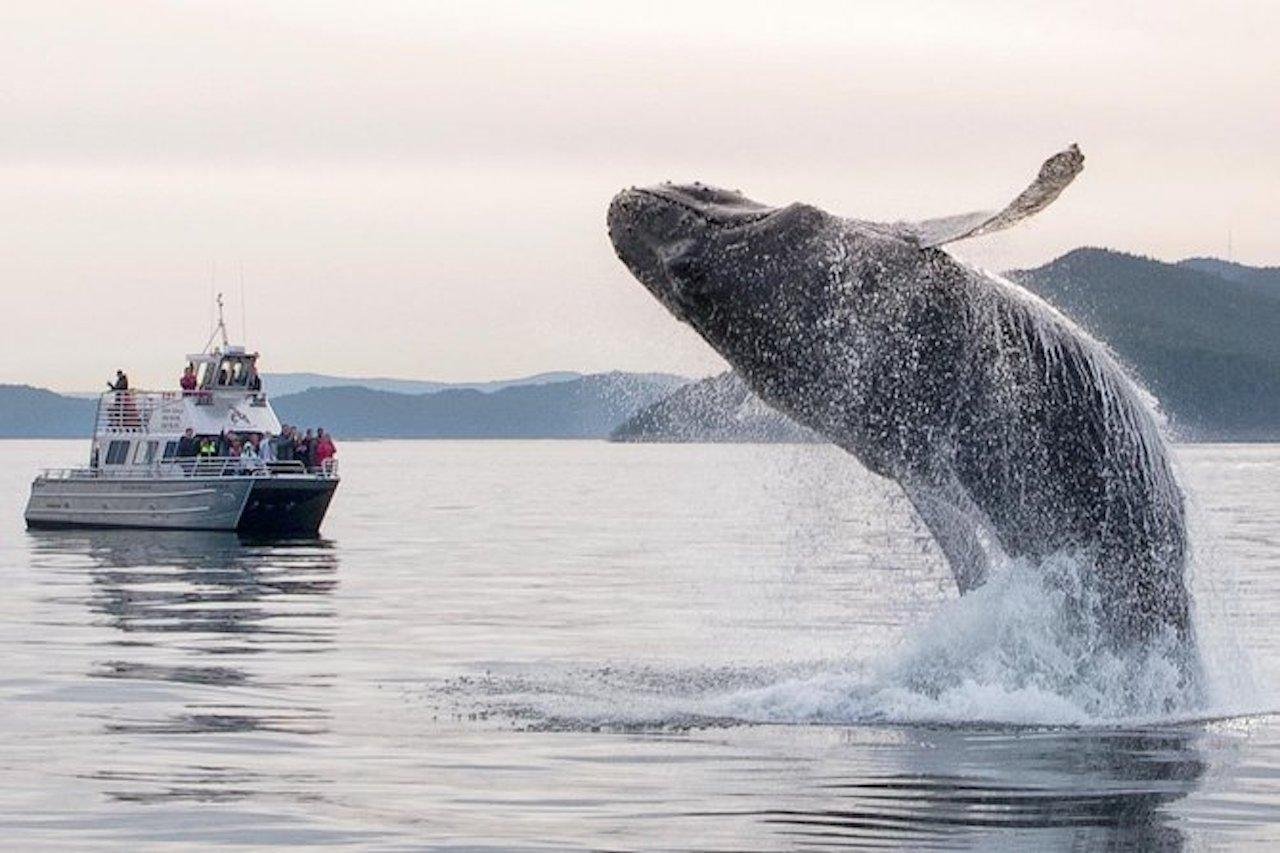
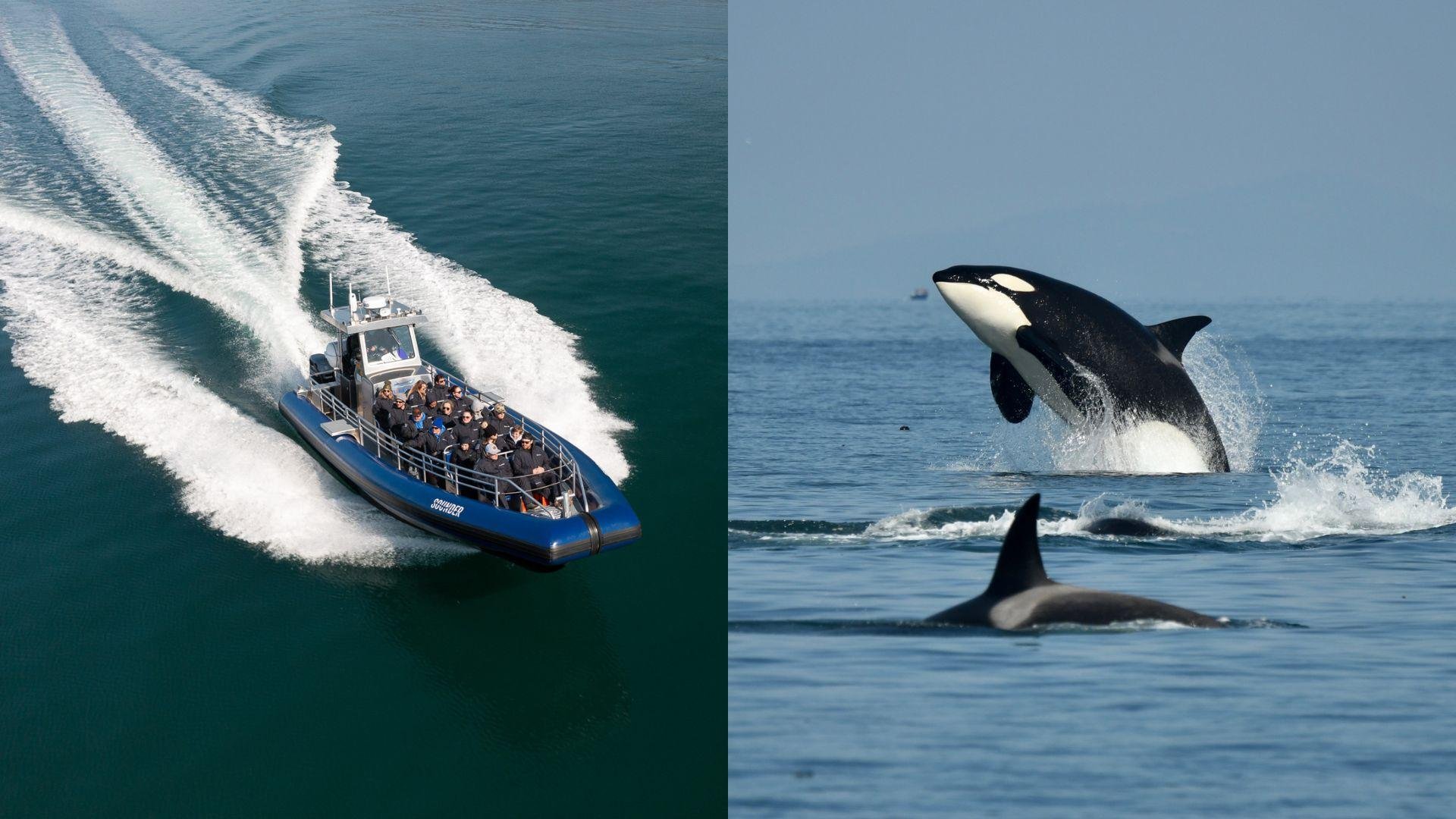
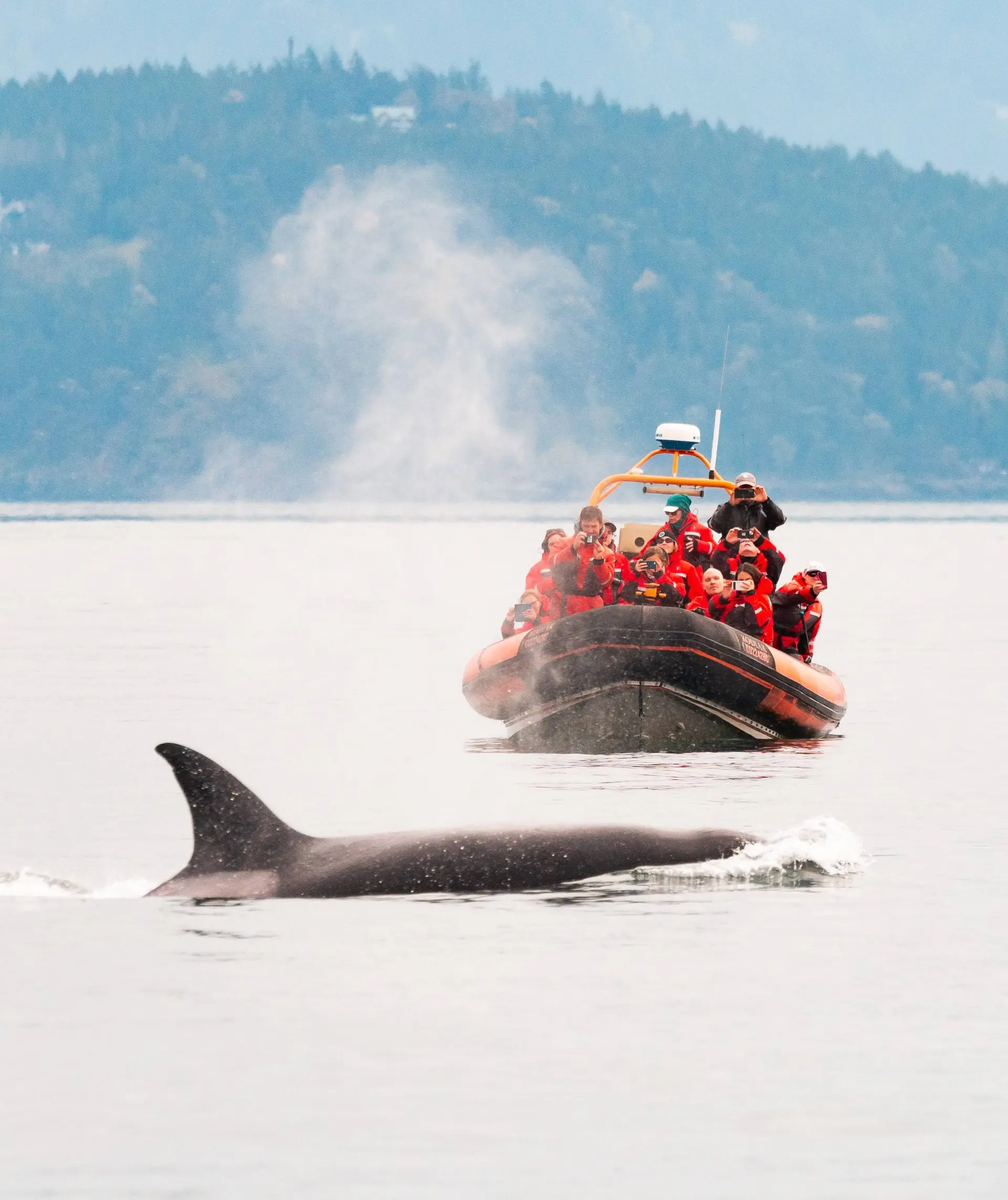
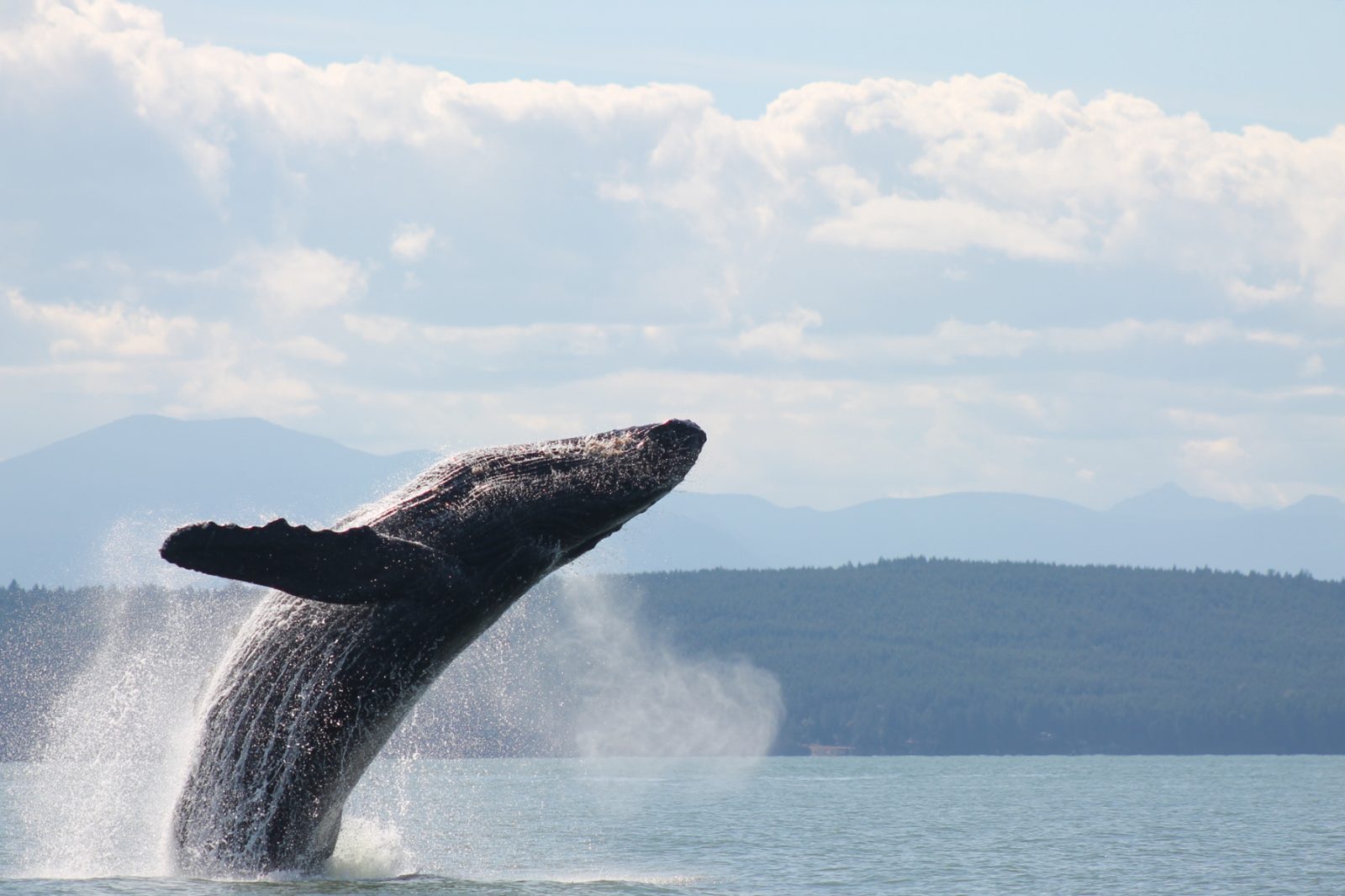
Zodiac expeditions seat twelve and plane across the water at twenty knots, closing distance faster than large cruises but subject to the same two-hundred-yard boundary. You brace against the pontoon as the boat follows a humpback's dive pattern, waiting for the breach that sends thirty tons of whale vertically out of the sea. The splash carries a hundred yards, and you wipe salt spray from your lens as the whale settles back into a slower rhythm.
All the details about your upcoming adventure in one place
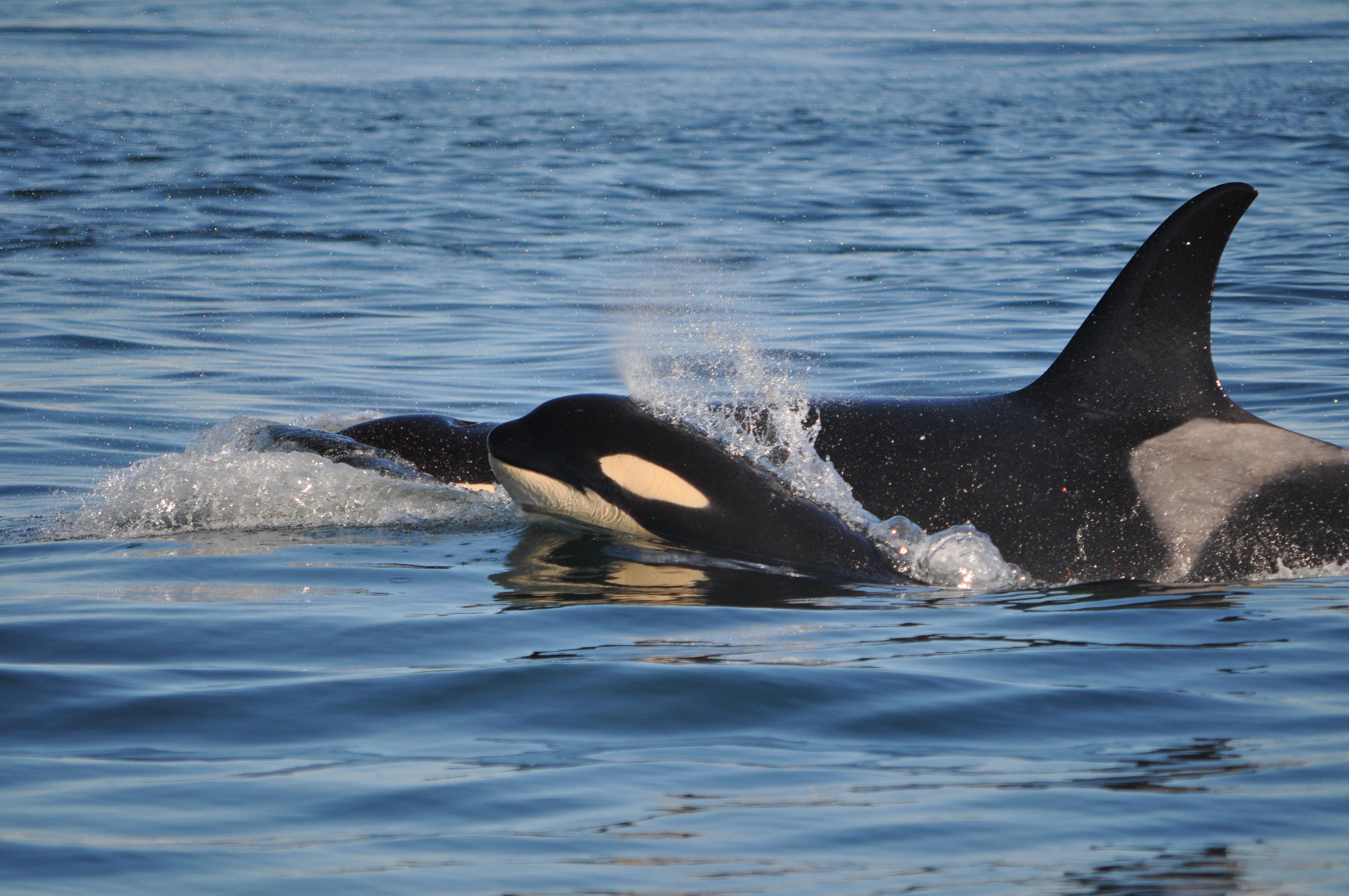
The Salish Sea holds the highest density of killer whales in the temperate Pacific, with three resident orca pods — J, K, and L — numbering seventy-four individuals as of the 2026 census.
These southern residents remain genetically and behaviorally distinct from transient Bigg's killer whales, which hunt marine mammals rather than salmon, and both populations converge in the corridor between the San Juan Islands and Vancouver Island during the spring and summer feeding season. The waterway's depth, tidal velocity, and abundance of Chinook salmon create conditions that marine biologists have studied for five decades, making this one of the most documented cetacean habitats in the world.
Seattle whale watching tours depart from Pier 69 on the downtown waterfront and from Anacortes, the gateway to the San Juans, with routes that follow NOAA guidelines requiring vessels to maintain two hundred yards from any whale and prohibit approach from the front or rear. The regulation, tightened in 2021, reflects decades of research into acoustic disturbance and prey availability. Operators now rely on shore-based spotters and hydrophone networks to locate pods without active pursuit, a shift that has measurably reduced vessel noise in critical habitat zones. Gray whales, humpbacks, minke whales, Dall's porpoises, harbor seals, and Steller sea lions round out sightings, though orcas remain the primary draw.
The region's marine topography — steep drop-offs, narrow passes, and glacial troughs — funnels nutrient-rich water from the open Pacific into the inland sea, sustaining kelp forests and eelgrass meadows that anchor the food web. Haro Strait and Boundary Pass, two of the most reliable viewing corridors, sit at the convergence of Canadian and U.S. waters, where international cooperation on whale recovery has been formalized through the Pacific Salmon Treaty and cross-border vessel regulations. The Seattle washington whale watching tour industry, worth forty-three million dollars annually, operates under a code of conduct developed with the University of Washington's Center for Conservation Biology.
Historical overfishing, dam construction on the Columbia and Snake rivers, and industrial pollution reduced the southern resident population from an estimated two hundred in the 1960s to seventy-four today, making every sighting a reminder of both resilience and fragility. The whales' matrilineal social structure means each pod carries distinct vocalizations — a dialect passed through generations — and researchers can identify individuals by dorsal fin shape and saddle patch pigmentation. The whale watching tour experience doubles as citizen science: many operators share real-time data with the Orca Network and the Whale Museum, contributing to long-term behavioral and health monitoring that informs federal recovery plans.

The Salish Sea holds the highest density of killer whales in the temperate Pacific, with three resident orca pods numbering seventy-four individuals as of the 2026 census.
Dress in layers, as temperatures on the Salish Sea are often significantly cooler than on land. Windproof and waterproof jackets are recommended for every seattle washington whale watching tour.
Small daypacks are permitted, but space is limited inside the cabins. Guests may be asked to stow larger items before boarding a seattle washington whale watching tour.
Photography is encouraged during your seattle washington whale watching tour, but please ensure your gear is secure from sea spray. Use a neck strap to protect your camera equipment while scanning the water.
Children are welcome, though life vests must be worn by minors as directed by crew. A seattle washington whale watching tour provides an educational experience for all ages.
Some vessels offer limited wheelchair access to the main deck. Contact the operator directly to confirm if a specific seattle washington whale watching tour meets your mobility needs.
Guests may bring light snacks and non-alcoholic beverages on board. Dispose of all trash in provided bins to protect the Salish Sea ecosystem.
Opening hours
09:00–17:00
Address
Pier 69, 2701 Alaskan Way, Seattle, WA 98121
Accessibility
Varies by vessel; inquire upon booking
Best arrival window
09:00–14:00
Storage
Limited space on board
Official site
https://www.whalewatching.com
Public transport · 15 min · 2.50 USD
Use the Link Light Rail to Westlake Station and walk to the waterfront.
Car · N/A · Varies by lot
Park at nearby public garages along Alaskan Way.
Full refunds are typically available for cancellations made at least 48 hours in advance. Please note that while the seattle washington whale watching tour access to the pier is 0 USD, individual tour costs remain subject to specific operator terms.
Recommended time
4-6 hours
A typical seattle washington whale watching tour requires allocating half a day to account for check-in procedures at Pier 69 and the duration spent on the water in the Salish Sea. Guests should factor in extra time for boarding protocols and viewing harbor seals or porpoises near the dock before departure. Securing your seattle washington whale watching tour tickets in advance helps streamline the boarding process, as mid-day sailings often see higher volume. When planning your seattle washington whale watching tour tours, please arrive early to ensure a smooth experience for your Salish Sea expedition.
Crowd levels through the day
Weather · crowds · average price — dots go green to amber to red as each metric rises.
April to June marks the start of the season with gray whale sightings.
July to September offers peak weather and higher probabilities of seeing orcas.
October provides quieter waters for a seattle washington whale watching tour.
Monitor marine forecasts before booking a seattle washington whale watching tour.
Bring your own to maximize wildlife spotting efficiency.
Bring water to stay comfortable during long hours at sea.
Arrive at the Pier 69 location well before the scheduled time.
Take preventative measures if you are prone to motion sickness.
2701 Alaskan Way, Seattle, WA 98121
Main boarding area for Seattle departures
Get directionsCommercial whale watching in the Salish Sea began in 1976 when Vancouver operator Jim Borrowman launched the first dedicated orca-viewing excursions from Telegraph Cove. Seattle washington whale watching tour operators followed within two years, establishing departures from Elliott Bay piers to intercept the Southern Resident pods that had frequented these inland waters for millennia. Early vessels were repurposed fishing boats carrying fewer than twenty passengers. The Coast Salish people had coexisted with these orcas for over four thousand years, referring to them as blackfish and incorporating their imagery into ceremonial art, but the modern tourism industry emerged only after the 1970 capture moratorium ended live orca collections for marine parks. By 1985 the Seattle fleet had grown to eight operators, each running seasonal tours between May and October when salmon runs drew the whales closest to urban shores. The industry faced its first crisis in 2003 when scientists documented a twenty percent decline in the Southern Resident population, prompting federal endangered species protections. New regulations in 2011 mandated two-hundred-yard approach distances and banned pursuit behavior, forcing tour companies to adopt passive observation protocols. Hydrophone technology became standard equipment, allowing passengers to hear whale vocalizations without encroaching on pod boundaries. The sector contracted sharply after 2018 when Washington State imposed vessel speed restrictions and seasonal no-go zones around critical foraging habitat. Three Seattle operators ceased whale-focused departures, pivoting instead to broader marine wildlife tours that highlighted harbor seals, sea lions, and seabird colonies. Today the remaining seattle washington whale watching tour tickets include comprehensive educational components about orca conservation, with naturalists explaining the extinction risks facing J, K, and L pods. Sightings now occur on roughly sixty percent of departures, down from near-guaranteed encounters in the 1990s, reflecting both stricter viewing protocols and the precarious status of the Southern Residents.
First commercial orca-viewing tours launch from Vancouver Island's Telegraph Cove.
Seattle operators begin regular whale watching tours departing from Elliott Bay to observe Southern Resident orcas.
Seattle fleet expands to eight dedicated whale watching companies as seasonal demand grows.
Southern Resident orcas receive federal endangered species protection following documented population decline.
New federal regulations mandate two-hundred-yard vessel approach distances and ban pursuit behavior around whales.
Washington State imposes vessel speed limits and seasonal exclusion zones to protect critical orca foraging habitat.
Seattle tours shift toward broader marine wildlife focus with educational conservation programming.
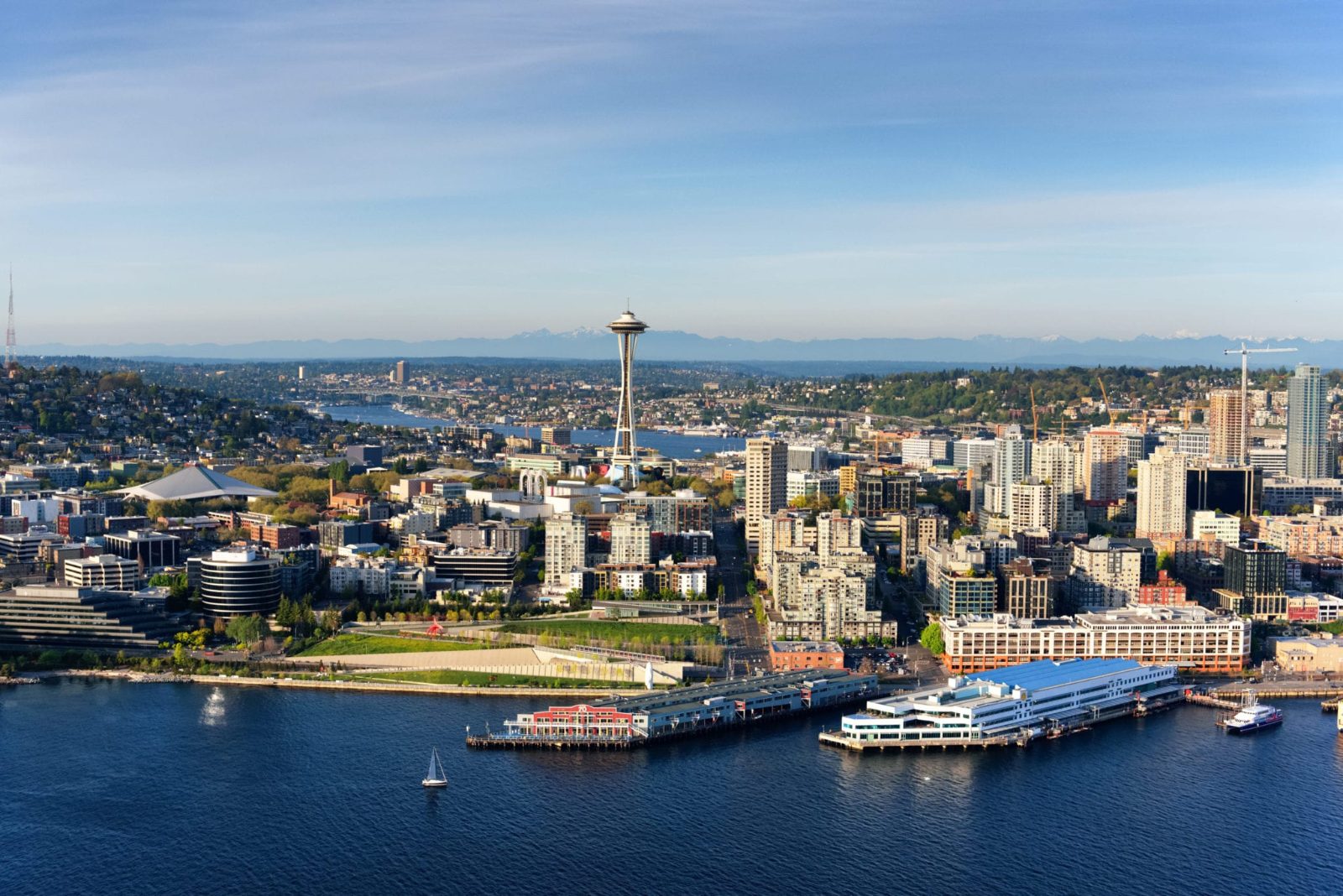
Stand at the northern end of the pier for a clear view of the departing vessel against the downtown skyline. This provides a clean perspective before boarding your seattle washington whale watching tour.
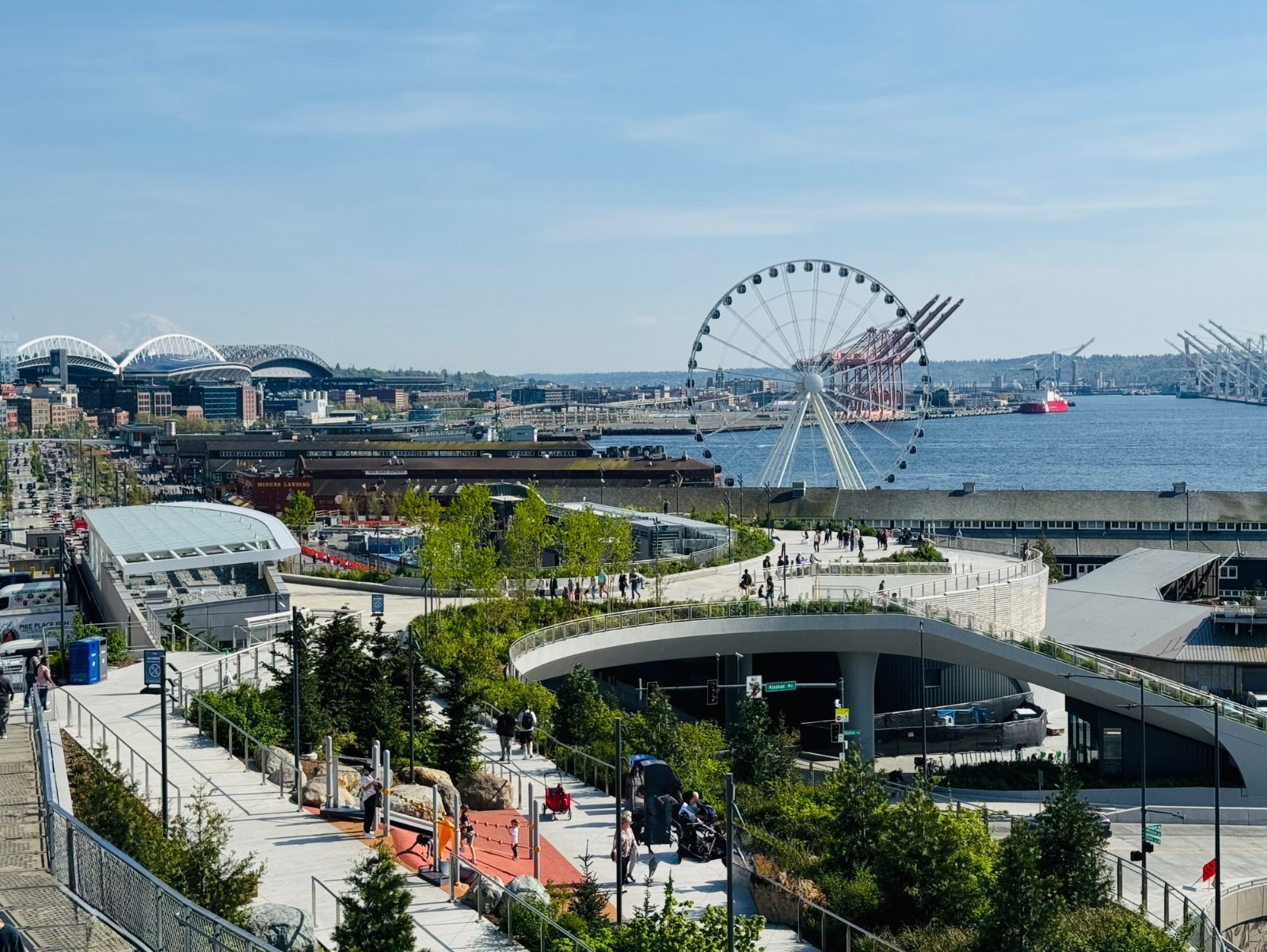
This walkway offers a wide angle of the ferries and marine traffic near the dock. It serves as a prime location to capture the maritime atmosphere before you secure your seattle washington whale watching tour tickets.
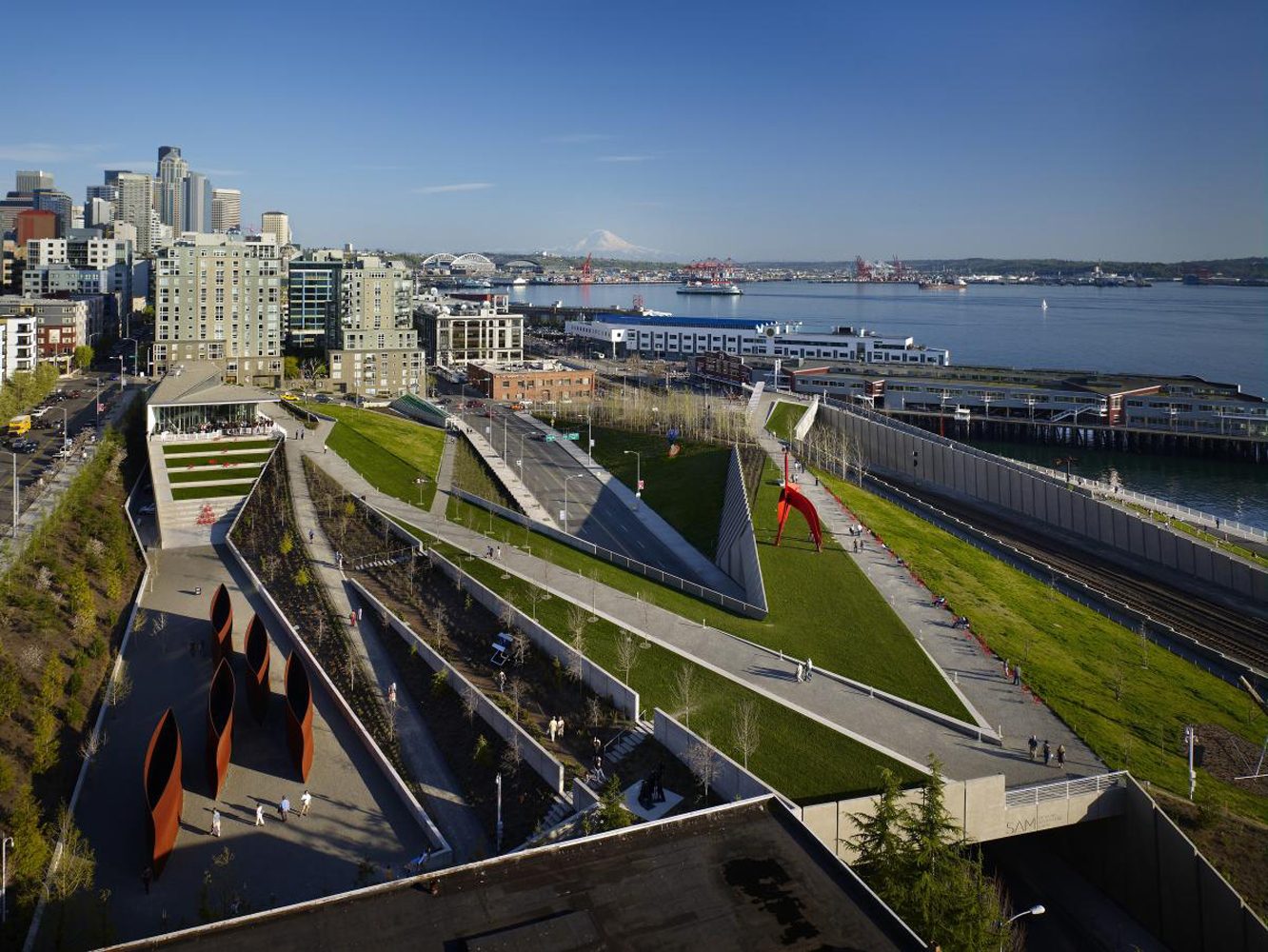
Located just north of the pier, this path provides elevated vistas of the Salish Sea and distant mountain ranges. The expansive scenery is ideal for context shots of a seattle washington whale watching tour tour before departure.
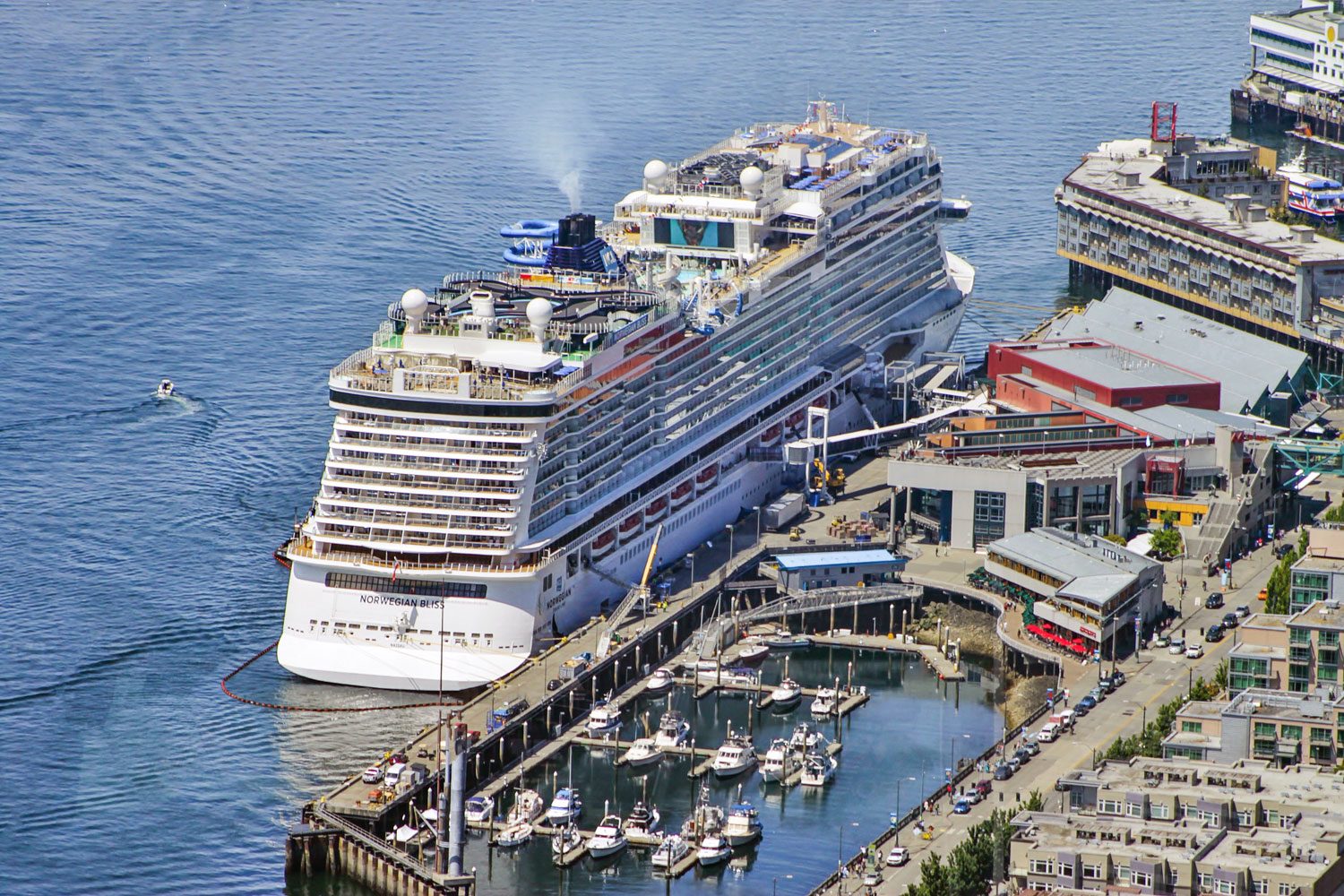
This vantage point allows for a downward angle of the dock area where boats prepare for excursions. It is a functional spot for documenting the scale of the harbor during a seattle washington whale watching tour tours expedition.
Embarking on a seattle washington whale watching tour provides families with a front-row seat to the Salish Sea ecosystem. Observing orcas and marine mammals in their natural habitat creates a quiet sense of discovery for children of all ages.
Most vessels require strollers to be folded and stored during the trip, as deck space is limited for gear. It is best to bring a baby carrier for easier movement around the boat.
Children aged five and older generally engage best with the longer duration of these seattle washington whale watching tour tours. Younger children may find the open water environment challenging, so assess your child's comfort with boat travel before booking.
Restrooms are available on board most vessels, though changing tables are rarely provided. We recommend ensuring your little ones are prepared before you board your seattle washington whale watching tour tour.
To maximize your chances of success, secure your seattle washington whale watching tour tickets for the recommended morning or early afternoon departure. This timing aligns with wildlife activity patterns and allows for a more relaxed schedule after you return to Pier 69.
The Salish Sea is an outdoor environment where weather can shift quickly during autumn months. Dressing in layers with waterproof outer shells is essential for keeping kids comfortable during your marine excursion.
Dining options near your seattle washington whale watching tour are plentiful along the vibrant Alaskan Way waterfront. Whether you need a quick pre-departure coffee or a sit-down meal after your Salish Sea expedition, several establishments are located within a short walk of Pier 69.
Upscale regional seafood featuring local salmon and Dungeness crab. This venue offers classic Pacific Northwest flavors ideal for guests who have finished their seattle washington whale watching tour tours.
Everything you need to know for your journey
The office is open Monday through Sunday, 09:00–17:00.
Access to the Pier 69 area is 0 USD, though tour tickets are priced separately.
The best time to book seattle washington whale watching tour tickets is during the morning and early afternoon for better light.
Yes, children are welcome to join a seattle washington whale watching tour with adult supervision.
Items such as drones, glass bottles, and weapons are prohibited on every seattle washington whale watching tour.
Durations vary by provider, so check your specific seattle washington whale watching tour booking confirmation.
Yes, arrive between 09:00–14:00 to ensure a smooth check-in for your seattle washington whale watching tour.
Guests may bring light snacks on a seattle washington whale watching tour; please manage trash responsibly.
Photography is encouraged on a seattle washington whale watching tour, but protect your gear from spray.
Check the terms of your seattle washington whale watching tour for specific refund windows, usually 48 hours prior.
Explore regional marine life exhibits.
Offers views over the harbor.
Features outdoor art installations.
Iconic waterfront hotel near the terminal.
Convenient district for downtown access.
Join thousands of happy travelers who have discovered this incredible experience
Book Your Experience Now